SITARJEVEC MINE
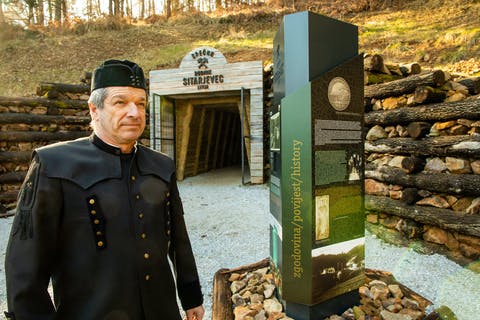
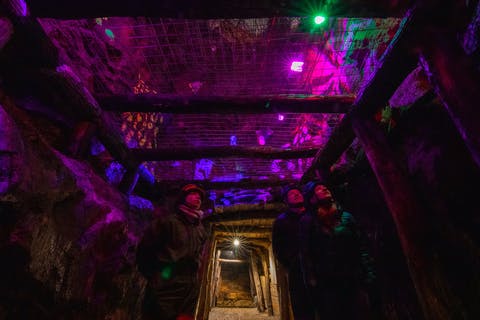
Before entering the mine, you will
receive a protective helmet, boots, and overalls, and then, accompanied by a
guide, walk along the exit and main tunnel of the Sitarjevec Mine. In the mine
you will learn about the method of mining at a time when the mine was still
open, mining anecdotes are also presented, which were collected based on the
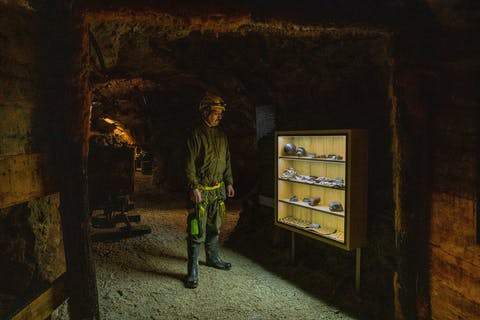
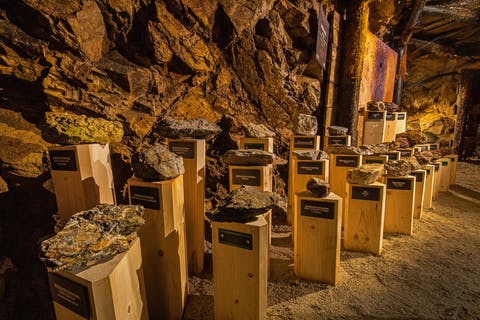
oral narratives of still-living miners. In the mine, visitors can see exhibits
of rocks, a mining cart, some mining tools, a reconstructed track, an exhibition
about a living bat in the Sitarjevec Mine, a panel with a reproduction of the
paleoenvironment from the Posavje folds, exhibits of fabrics dyed with water
from the mine, an exhibition of hematite jewelry. A short film is shown in the
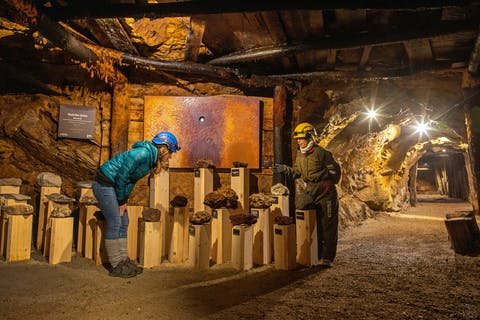
mine hall. A short film is shown in the mine hall. Ore samples from the mine are
exhibited on special bases, which are specially made for this purpose and
adequately lit, as well as for ore veins. Also on display are tools used to dig
ore during mining. Reconstructions of plant and animal specimens are shown in
the extended tunnels. The paleoenvironment of the time, as it was at the time of
the sedimentation, from which the rocks that make up the present mine were
formed, is staged. All exhibits are appropriately explained on information
boards.
 In
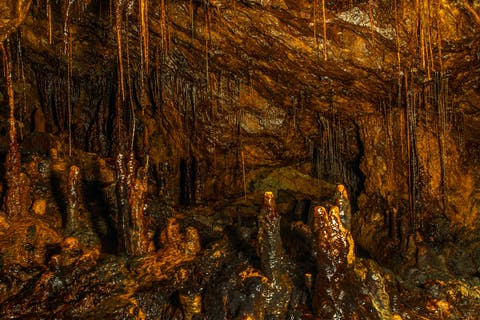
the lower part of the mine, where the main tunnel is, you will experience the
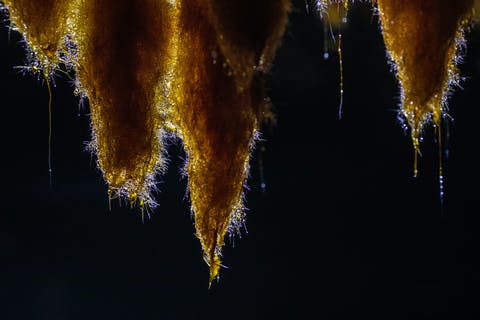
mine in an authentic environment. This is a very vulnerable place, as the famous
limonite stalactite structures and limonite mud are intensively formed in it,
which is why the Sitarjevec mine is so very colorful. Especially interesting to
see is the hall with rich and diverse stalactite structures, which was
accidentally discovered during the restoration work in the Sitarjevec Mine. Due
to the vulnerability of the space, it is entered individually accompanied by a
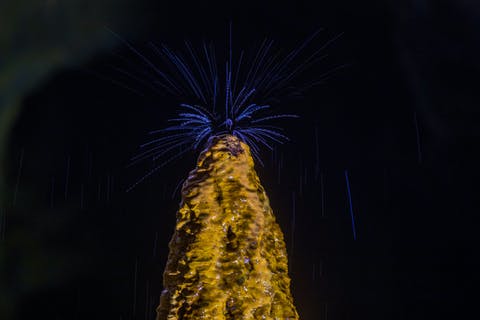
guide. In the hall you can see various limonite stalactite forms, these are
stalagmites and stalactites in the form of stalactite spaghetti and stalactite
curtains. The hall is rubble that buried the existing tunnel. Visitors ascend to
the top of the tunnel, and behind it, we can see a backfilled tunnel flooded
with water, and the original tunnel support is still preserved. The tunnel is
located below the ore-bearing zone or. under the sulfide ore body, which is also
the reason why so many stalactite structures are formed in the hall.
In
the lower part of the mine, where the main tunnel is, you will experience the
mine in an authentic environment. This is a very vulnerable place, as the famous
limonite stalactite structures and limonite mud are intensively formed in it,
which is why the Sitarjevec mine is so very colorful. Especially interesting to
see is the hall with rich and diverse stalactite structures, which was
accidentally discovered during the restoration work in the Sitarjevec Mine. Due
to the vulnerability of the space, it is entered individually accompanied by a
guide. In the hall you can see various limonite stalactite forms, these are
stalagmites and stalactites in the form of stalactite spaghetti and stalactite
curtains. The hall is rubble that buried the existing tunnel. Visitors ascend to
the top of the tunnel, and behind it, we can see a backfilled tunnel flooded
with water, and the original tunnel support is still preserved. The tunnel is
located below the ore-bearing zone or. under the sulfide ore body, which is also
the reason why so many stalactite structures are formed in the hall.



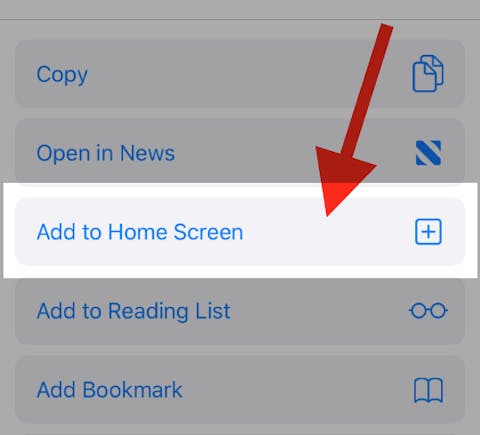
To add this web app to your homescreen, click on the "Share" icon

Then click on "Add to Home"
To add this web app to your homescreen, click on the "Share" icon
Then click on "Add to Home"
It looks like your browser doesn't natively support "Add To Homescreen", or you have disabled it (or maybe you have already added this web app to your applications?)
In any case, please check your browser options and information, thanks!
It looks like your browser doesn't natively support "Add To Homescreen", or you have disabled it (or maybe you have already added this web app to your applications?)
In any case, please check your browser options and information, thanks!